

Plumbing emergencies don’t wait for business hours. A burst supply line at 11 p.m. or a water heater dying on Sunday morning means the homeowner calls down the list until someone picks up. If your line goes to voicemail — or your tech is under a sink and can’t answer — that job often goes to the shop that answered first.
An AI receptionist is software that answers your phone (and often texts) in your company name, qualifies the caller, captures the details, and books or routes the lead so someone on your team can act. It’s not a full CSR replacement for complex sales conversations. It’s coverage for the moments that cost you the most: after hours, overflow during peak days, and calls that would otherwise die in a callback queue.

An AI receptionist answers in your company name, qualifies the call, and books or routes the lead.
Missed calls are lost jobs, not “leads to follow up”
When a homeowner has water on the floor, they are not waiting for a polite callback tomorrow. Industry patterns are consistent: the first shop that responds wins a large share of closed work, and waiting even a few minutes kills contact rates. Shops that leave after-hours callers in voicemail for 10+ hours recover almost none of those jobs — people already hired someone else.
An AI receptionist picks up on the first ring, every time. That alone changes the economics of nights, weekends, and holidays without putting a human on salary for every quiet hour.

After-hours and overflow coverage keeps the line live when techs can’t pick up.
Qualify urgency the way a good CSR would
A useful plumbing AI receptionist doesn’t just take a name and number. It asks the questions that matter:
- What’s happening (leak, no hot water, clog, sewer backup)?
- Is water actively flooding / can they shut off the main?
- Address and access notes
- Preferred window vs true emergency
True emergencies get flagged and routed to on-call. Routine work (faucet swap, estimate request, non-urgent drain) can be booked into open slots or logged for the morning CSR. Spam and robocalls get filtered so techs stop losing time to junk while they’re on a job.
Book, confirm, and keep the calendar clean
Beyond answering, stronger setups handle the front-office loop: book into your schedule or CRM, send confirmations, help with reschedules or cancels, and in some stacks follow up by SMS. That reduces no-shows and frees the office from “just calling to confirm” for every appointment.
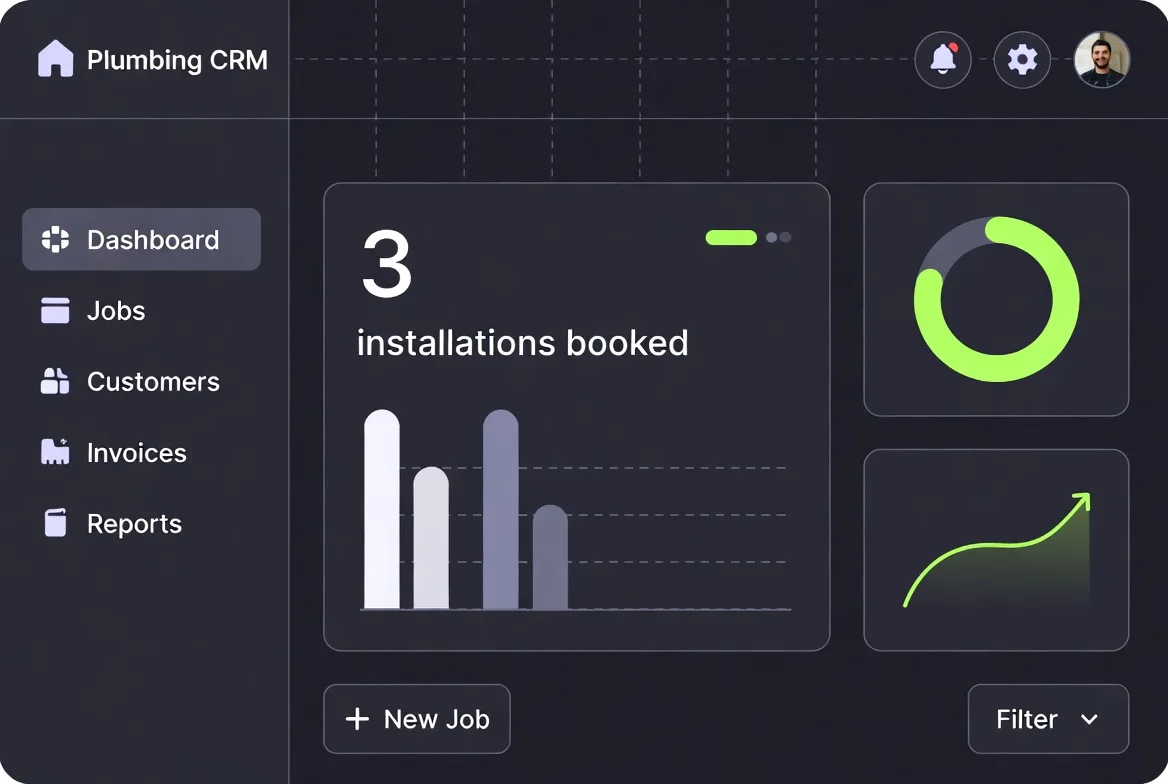
Bookings and confirmations keep the calendar clean without a night-shift CSR.
The agent is only as good as the playbook you give it — service area, hours, job types you take, after-hours rules, and what counts as an emergency. Garbage rules in, garbage bookings out. The shops that win treat the AI like a new hire: train it on how you run, then tighten it from real call transcripts.
Protect the owner’s phone without going dark
Owner-operators who answer everything themselves pay twice: interrupted jobs during the day, and lost sleep or missed after-hours revenue at night. A common pattern is AI on the main line 24/7, with live transfer or text-to-owner only for true emergencies that match your rules. Non-urgent overflow stays off the personal cell. That keeps the brand reachable without making every marketing call a personal interruption.
Where it sits next to your website and CRM
An AI receptionist doesn’t replace a clear website or a job system. The site still wins the click and builds trust; the CRM or field software still owns the job record. The receptionist is the layer that turns a ring (or a web/LSA lead that needs a call) into a captured, qualified opportunity before the homeowner hangs up.
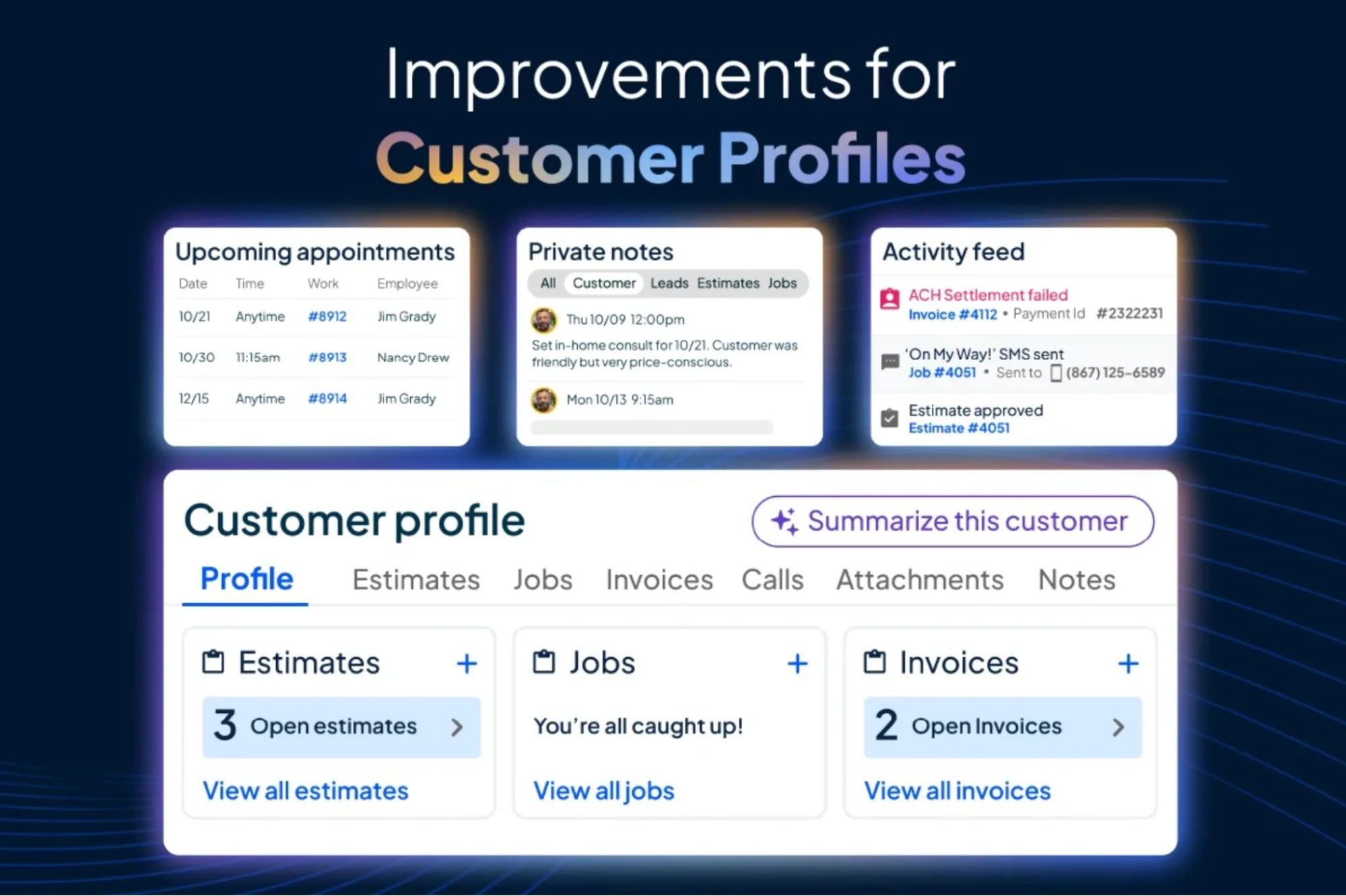
Housecall Pro customer profile — CRM view with contact history and job context (source: housecallpro.com).
If those three pieces don’t talk — website says one thing, AI books outside your zone, CRM never gets the note — you create chaos. Wire them so the same service area, hours, and booking rules show everywhere.
What “good enough” looks like for a plumbing shop
You don’t need every feature on day one. A practical rollout:
- Cover after-hours and weekends first — that’s where voicemail loses the most money.
- Define emergency vs bookable — shutoff instructions, flood vs “slow drain,” what wakes the on-call.
- Capture every lead in one place — name, phone, address, issue, urgency, into your CRM or inbox.
- Review weekly transcripts — fix wrong answers, tighten scripts, kill spam patterns.
- Add daytime overflow once nights are solid — so the CSR isn’t drowning on peak mornings.
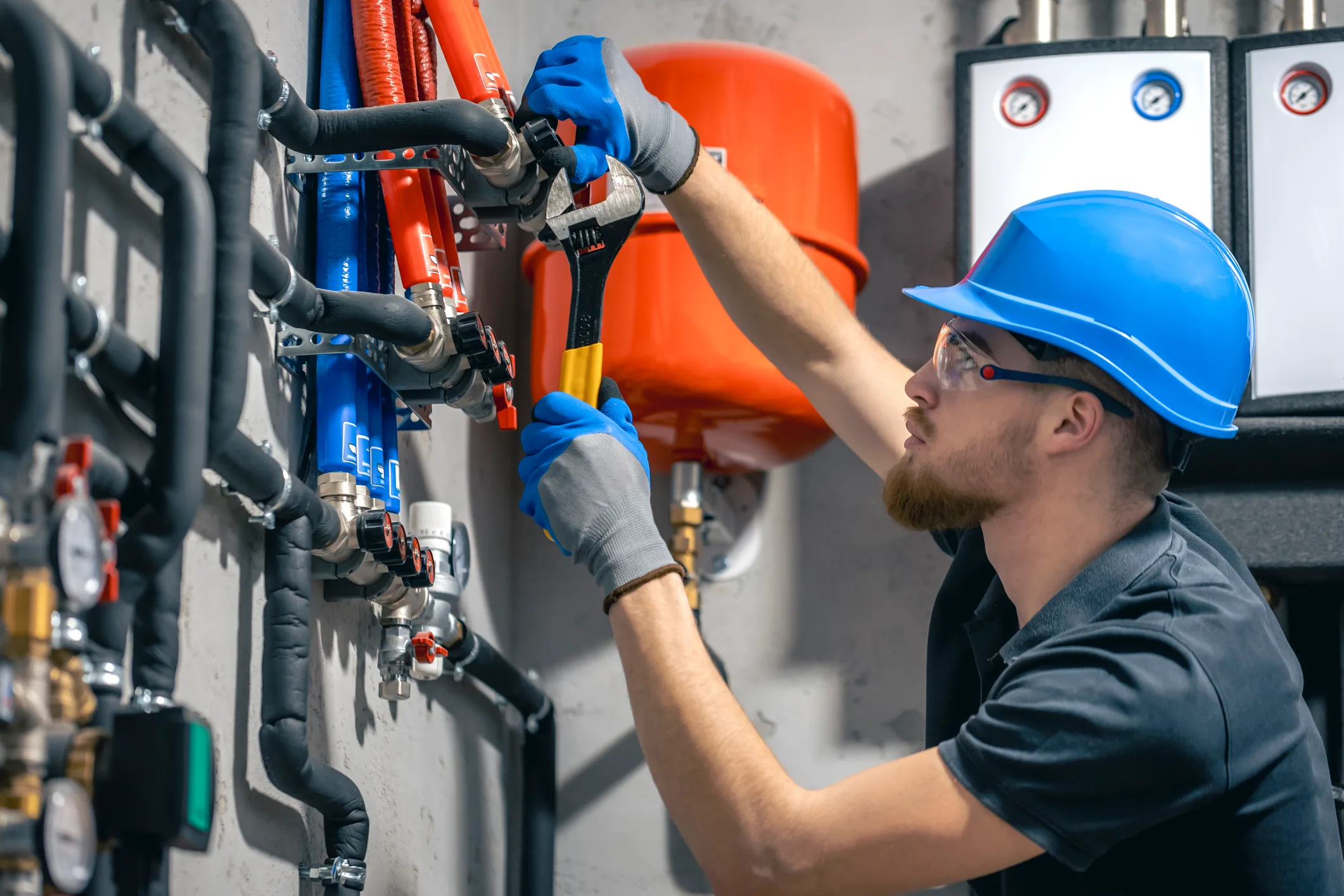
When phones are covered, techs stay on the job instead of juggling after-hours rings.
An AI receptionist isn’t magic
It won’t fix a weak offer, a site that doesn’t convert, or a shop that can’t staff the jobs it books. It will stop paying to generate calls that nobody answers. For plumbing Pros, that’s often the highest-ROI ops fix available: answer every call, qualify fast, book what you can, escalate what you must — without hiring a night shift.
Plumbify’s plumber-only offer includes the website, light CRM, and an AI receptionist so the front door, the phones, and the follow-up match how a modern shop actually wins work.
See Plumbify →